


In devices that stay in prolonged or repeated contact with the human body - indwelling catheters, urinary catheters, infusion lines - the material directly determines safety, comfort and durability. PVC, once widely used, is being phased out because of plasticizer leaching, while TPU (thermoplastic polyurethane) has become the material of choice for a new generation of medical catheter films and tubing thanks to its combination of "plasticizer-free + highly flexible + biocompatible".
What Is TPU and Why Is It Suitable for Medical Catheters?
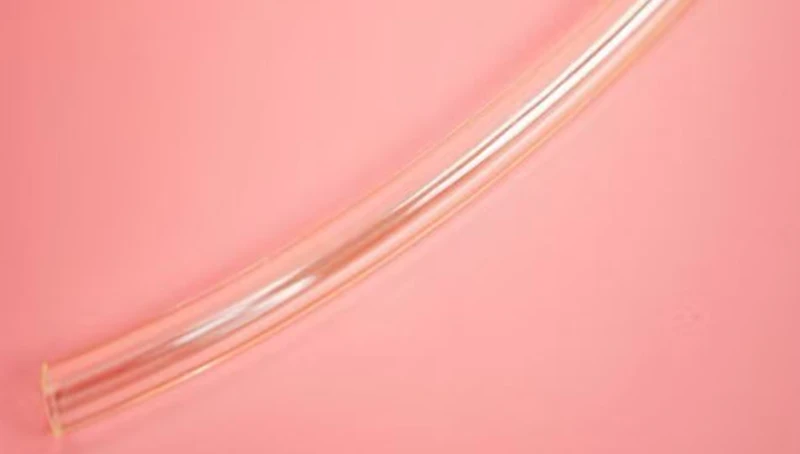
- TPU (Thermoplastic Polyurethane) is a block copolymer made of soft segments (polyol) and hard segments (isocyanate / chain extender). This microstructure gives it both rubber-like elasticity and plastic-like processability - soft and skin-friendly like silicone, yet extrudable and weldable like a thermoplastic. Medical-grade TPU passes biocompatibility tests such as ISO 10993 / USP Class VI and contains no phthalate (DEHP) plasticizers, making it especially suitable for catheters, urinary catheters and drainage tubes that contact the body over long periods.
- TPU (Thermoplastic Polyurethane) is a block copolymer made of soft segments (polyol) and hard segments (isocyanate / chain extender). This microstructure gives it both rubber-like elasticity and plastic-like processability - soft and skin-friendly like silicone, yet extrudable and weldable like a thermoplastic. Medical-grade TPU passes biocompatibility tests such as ISO 10993 / USP Class VI and contains no phthalate (DEHP) plasticizers, making it especially suitable for catheters, urinary catheters and drainage tubes that contact the body over long periods.
Core Product Characteristics of TPU Film
Plasticizer-free, safe and non-toxic (DEHP-Free)
Traditional PVC catheters rely on phthalate plasticizers to stay flexible, but these substances leach out over time and pose endocrine-disruption risks; DEHP is now strictly restricted in medical devices in the EU, US and other regions. TPU is soft by nature and requires no plasticizer, eliminating leaching at the source - the better choice for sensitive scenarios such as pediatrics, long-term indwelling and urogenital use.
Excellent biocompatibility
Medical-grade TPU shows low cytotoxicity, low sensitization and good blood compatibility, meeting the requirements for long-term contact with skin and internal mucosa, and significantly reducing irritation and inflammatory reactions during catheterization.
High flexibility and elastic memory (kink resistance)
Catheters often have to bend inside the body; kinking blocks drainage and can cause injury. TPU offers outstanding pliability and "spring-back memory", recovering its shape quickly after compression or bending. Its kink resistance is markedly better than PVC and ordinary polyolefins, keeping the lumen patent.
High transparency for clinical observation
TPU film can reach high light transmission, letting clinicians directly observe urine, medication, blood reflux and air bubbles inside the tube, so blockages or abnormalities are spotted early and nursing safety improves.
High mechanical strength, tear and pressure resistance
Unlike silicone, which is "soft but brittle", TPU keeps its softness while delivering higher tensile strength and tear resistance, with higher burst pressure. It is less likely to break during pulling, fixation or patient turning, and is more durable.
Resistant to body fluids and chemicals
It tolerates urine, body fluids, many drug solutions and common disinfectants well, and does not easily swell, crack or become sticky with age - suitable for demanding clinical environments over long use.
Low protein adsorption, low thrombosis tendency
With controllable surface energy and tunable hydrophilicity, it reduces protein and platelet adhesion, lowering the risk of catheter-related thrombosis and biofilms (infection), and offering some benefit against catheter-associated urinary tract infection (CAUTI).
Thermoplastic and easy to process, weld and hold dimension
It can be extruded into thin-wall, precision-bore tubing and is easy to heat-seal, bond, print and assemble. Dimensional accuracy and consistency are good, favoring automated mass production at controlled cost.
Sterilizable and aging resistant
It is compatible with mainstream sterilization such as ethylene oxide (ETO) and gamma irradiation; some grades also withstand moist-heat sterilization. Its weather and UV aging resistance outperform many elastomers, giving stable storage and shipping.
Recyclable and eco-friendly
As a thermoplastic, TPU scrap can be reclaimed and reused; some grades are already available from bio-based sources, fitting green-healthcare and ESG trends better than disposable silicone or rubber.
TPU vs. Other Catheter Materials
|
Dimension |
PVC (plasticized) |
Silicone |
Latex / Natural rubber |
PEBAX |
TPU |
|
Plasticizer leaching |
Yes (DEHP risk) |
No |
No |
No |
No |
|
Biocompatibility |
Fair |
Excellent |
Sensitization risk |
Excellent |
Excellent |
|
Flexibility / kink |
Stiff, brittle |
Soft |
Soft |
Excellent |
Excellent |
|
Strength / pressure |
Medium |
Weak, tears |
Medium |
High |
High |
|
Transparency |
Good |
Translucent |
Opaque |
Good |
High |
|
Processing / weld |
Easy |
Hard to bond |
Fair |
Easy |
Easy |
|
Cost |
Low |
High |
Medium |
High |
Cost-effective |
Conclusion: TPU achieves the best balance across six dimensions - safety (plasticizer-free) + flexible kink resistance + high strength + high transparency + easy processing + reasonable cost. Its overall performance beats PVC and its cost-performance beats pure silicone and PEBAX, making it the ideal base material for most medical catheters and urinary catheters.
Frequently Asked Questions
Q1: Does a TPU catheter contain plasticizers? Is long-term use safe?
A: Medical-grade TPU is soft by nature and needs no phthalate plasticizers, so there is no DEHP leaching. It passes ISO 10993 biocompatibility evaluation and is safe for long-term indwelling scenarios.
Q2: TPU vs. silicone - which is better?
A: Silicone has excellent biocompatibility but low strength, tears easily, costs more and is hard to bond. TPU keeps its softness while being stronger, more pressure-resistant, easier to mass-produce and lower cost. For most routine catheters TPU offers better value; ultra-soft high-end cases can use the two complementarily.
Q3: Will it cause allergy or urethral irritation?
A: TPU has low sensitization and low cytotoxicity and little mucosal irritation. Compared with latex's protein sensitization risk it is almost negligible. Choose a biocompatibility-certified medical grade and control surface roughness.
Q4: Which sterilization methods does it tolerate?
A: Routine options are ETO and gamma irradiation; some heat-resistant grades allow moist-heat sterilization. Confirm with the selected grade and wall thickness.
Q5: Does a TPU urinary catheter reduce infection?
A:TPU's low protein adsorption and tunable hydrophilic surface help reduce biofilms and thrombosis, improving CAUTI outcomes - but it must be combined with proper care and limited indwelling time.
Q6: Can color, hardness and inner diameter be customized?
A: Yes. Hardness (Shore A 70–95 or softer), color, inner/outer diameter, wall thickness, hydrophilic/antibacterial coating and printing can all be tailored to different departments and procedures.
Conclusion
From "safe, no leaching" to "flexible kink resistance", from "high transparency for observation" to "high strength against pulling", TPU uses a balanced, practical set of properties to become the new-generation base material replacing PVC and complementing silicone's weaknesses. For urinary catheters, indwelling catheters and drainage tubes, medical-grade TPU catheter materials.


