As a TPU tubing supplier, I've witnessed firsthand the remarkable performance of TPU (Thermoplastic Polyurethane) tubing in various applications. One of the most critical aspects that customers often inquire about is how TPU tubing handles abrasion. In this blog, I'll delve into the science behind TPU's abrasion resistance, its real - world applications, and why it stands out in the market.
Understanding TPU and Its Abrasion - Resistant Properties
TPU is a versatile polymer that combines the properties of rubber and plastic. It is known for its high elasticity, excellent mechanical strength, and chemical resistance. When it comes to abrasion, TPU's molecular structure plays a crucial role. The hard and soft segments in TPU interact in a way that provides a unique balance of flexibility and toughness.
The hard segments in TPU are responsible for its strength and stiffness. They form a rigid network that can withstand external forces. On the other hand, the soft segments contribute to the material's flexibility and elasticity. This combination allows TPU tubing to deform under abrasion without breaking. When an abrasive force is applied to the TPU tubing, the soft segments absorb the energy, while the hard segments prevent excessive wear.
In addition to its molecular structure, the manufacturing process of TPU tubing also affects its abrasion resistance. We use advanced extrusion techniques to ensure a uniform wall thickness and a smooth surface finish. A smooth surface reduces the friction between the tubing and the abrasive material, minimizing wear.
Real - World Applications of TPU Tubing's Abrasion Resistance
Industrial Applications
In industrial settings, TPU tubing is often used in conveyor systems, pneumatic tools, and robotic applications. In conveyor systems, the tubing is exposed to constant rubbing against the conveyor belts and other components. TPU's abrasion resistance ensures that the tubing can withstand this wear and tear, reducing the need for frequent replacements. For example, in a large - scale manufacturing plant, TPU tubing used in pneumatic conveying systems can last significantly longer than other types of tubing, saving both time and money.
Medical Applications
TPU Medical Suction Tubing is another area where abrasion resistance is crucial. In medical environments, the tubing may come into contact with various surfaces during patient care, such as beds, medical equipment, and the patient's body. TPU's ability to resist abrasion ensures that the tubing remains intact and functional, preventing any potential leakage or contamination. This is especially important in critical medical procedures where the reliability of the tubing can directly impact patient safety.
Food Industry
In the food industry, TPU Tube for Food is widely used for the transfer of food products. The tubing may be in contact with rough surfaces during installation or operation. TPU's abrasion resistance ensures that no particles are released into the food during the transfer process, maintaining the quality and safety of the food. Moreover, TPU is compliant with food - contact regulations, making it a suitable choice for food - grade applications.
Testing and Evaluation of TPU Tubing's Abrasion Resistance
To ensure the quality and performance of our TPU tubing, we conduct a series of rigorous tests. One of the most common tests is the Taber abrasion test. In this test, a rotating abrasive wheel is applied to the surface of the tubing under a specific load. The weight loss of the tubing after a certain number of rotations is measured. A lower weight loss indicates better abrasion resistance.
We also perform field tests in real - world applications. By installing our TPU tubing in different environments and monitoring its performance over time, we can gather valuable data on its long - term abrasion resistance. This data helps us to continuously improve our products and meet the specific needs of our customers.
Comparison with Other Tubing Materials
When compared to other tubing materials such as PVC (Polyvinyl Chloride) and rubber, TPU tubing has significant advantages in terms of abrasion resistance. PVC tubing is relatively rigid and can crack easily under abrasion. Rubber tubing, while flexible, may not have the same level of strength and durability as TPU.
TPU's superior abrasion resistance means that it can be used in more demanding applications. For example, in applications where the tubing is exposed to high - speed particles or rough surfaces, TPU tubing is a better choice. It can also withstand repeated bending and flexing without losing its abrasion - resistant properties.
Factors Affecting TPU Tubing's Abrasion Resistance
While TPU tubing has excellent abrasion resistance, several factors can affect its performance. The type of abrasive material is one of the most important factors. Different abrasive materials have different hardness and particle sizes, which can cause varying degrees of wear on the tubing. For example, abrasive materials with sharp edges or large particles can cause more damage to the tubing than fine - grained abrasives.
The operating conditions also play a role. High temperatures can reduce the hardness and strength of TPU, making it more susceptible to abrasion. Similarly, exposure to certain chemicals can degrade the material and affect its abrasion resistance. Therefore, it is important to choose the right TPU tubing for the specific application and to ensure that the operating conditions are within the recommended range.
Choosing the Right TPU Tubing for Abrasion - Prone Applications
When selecting TPU tubing for applications where abrasion is a concern, there are several factors to consider. The wall thickness of the tubing is an important factor. A thicker wall generally provides better abrasion resistance, but it may also reduce the flexibility of the tubing. Therefore, a balance needs to be struck between abrasion resistance and flexibility.
The hardness of the TPU also affects its abrasion resistance. Harder TPU materials are generally more resistant to abrasion, but they may be less flexible. So, the hardness should be chosen based on the specific requirements of the application. For example, in applications where the tubing needs to be bent frequently, a softer TPU may be more suitable, even though it may have slightly lower abrasion resistance.
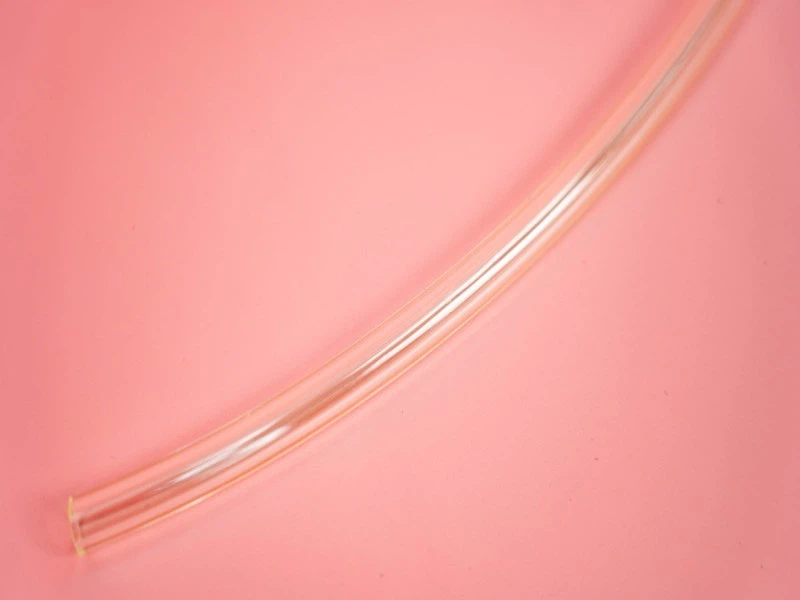
TPU 1x2 Tubing is a popular choice for many applications due to its balanced properties. It offers a good combination of abrasion resistance, flexibility, and strength, making it suitable for a wide range of industries.

Conclusion
In conclusion, TPU tubing is an excellent choice for applications where abrasion resistance is required. Its unique molecular structure, combined with advanced manufacturing processes, gives it superior abrasion - resistant properties compared to other tubing materials. Whether it's in industrial, medical, or food applications, TPU tubing can withstand the rigors of daily use and provide long - lasting performance.
If you're in the market for high - quality TPU tubing with excellent abrasion resistance, we'd love to discuss your specific needs. Our team of experts can help you choose the right product for your application and ensure that you get the best value for your investment. Contact us today to start the procurement discussion and experience the difference that our TPU tubing can make.
References
- "Thermoplastic Polyurethane Elastomers: A Review" by X. Wang and Y. Zhang.
- "Abrasion Resistance of Polymer Materials" in the Journal of Polymer Science.
- "Industrial Applications of TPU Tubing" from industry - specific research reports.